To put the Terraphim main idea in a simple metaphor, we omit two critical points when we say everyone lives in their bubble.
- Are those bubbles growing? So, is our area of known getting bigger or smaller?
- How many bubbles (social or professional roles) do we have? Can we jump between them quickly?
There is also another essential question to ask: How hermetic are those bubbles? How solid is the boundary (a reference to Kuhn’s theory of science and Lakatos’ “Proofs and refutations: The logic of mathematical discovery”)? Or, rephrasing it, how reliable is a causal inference within those devices we call “bubbles”?
That’s an exciting exchange of ideas: https://youtu.be/dBZp47999Ko
These moments are especially relevant for Terraphim:
00:24:08 Memorization vs. Reasoning in AI • Discussion on the memorization capabilities of AI models. • Importance of steering models towards desired distributions.
00:25:10 Machine Unlearning and Optimization • Discussion on machine unlearning and optimization techniques. • Importance of steering models towards desired distributions.
00:34:24 AI Safety and Precision of Language • Discussion on AI safety and its evolving definitions. • Emphasis on the importance of precise language in AI discussions.
and
00:41:07 Steerability and Control in AI Models • Exploration of the challenges in steering AI models towards desired outcomes. • Future directions for improving AI model steerability and control.
Basically, we have a long tail in engineering terms frequency because there are so many specific details we need to consider in each enterprise and project. To capture them, we extend our vocabulary, re-use terms with different meanings, and come up with complex terms built from several essential words.
Those patterns are undetectable because they are rare, and algorithms miss them. But if we map them to the domain model terms (or process model terms, like the SE digital process model, the SE Handbook terms, ISO standards, etc.), we can train LLMs to catch those specific patterns while keeping the specific causal models (token causality) of each particular application within enterprises and projects.
Trans-domain translation end-to-end use case
Imagine we start a new project with a client in an engineering company. The first thing we want to know is how the business operates. We conduct a series of interviews, make a transcription, and make a narrative like this (based on the simulator recording):
Arrival
- Landing:
- The airplane lands on the designated runway.
- The pilot slows it down.
- Taxiing to Gate:
- The airplane exits the runway via a taxiway.
- Air traffic control (ATC) provides taxi instructions to guide the airplane to the assigned gate or parking site.
- Arrival at Gate:
- Ground personnel guide the airplane to the gate or parking site using marshalling signals or automated docking systems.
- The airplane comes to a stop.
- Disembarkation:
- The jet bridge or air stairs are positioned, and passengers begin to disembark.
- If the airplane is stationed at a parking site, not at the terminal, ground handlers call a passenger bus, which capacity varies depending on the size of the airplane.
- A passenger bus collects disembarked passengers and brings them to the designated gate.
- Unloading Baggage and Cargo:
- A baggage transport arrives from a depot to the gate or parking site to collect baggage and cargo. The capacity of baggage transport varies depending on the size of the airplane.
- Ground handlers open the cargo holds and unload baggage and cargo.
- Baggage is transported to the baggage claim area, while cargo is taken to the cargo terminal.
- Airplane Cleaning:
- Cleaning crews board the airplane to clean the cabin, restrooms, and galleys. Again, the size of the cleaning crew depends on the airplane’s size.
- Trash is removed, and supplies are restocked.
- Maintenance and Refueling:
- Technicians perform a walk-around inspection to check for any visible issues or damage.
- If required, maintenance work is carried out on the airplane.
- Refueling trucks arrive, and the airplane is refuelled for the next flight.
- Catering Services:
- Ground handler sends catering trucks, which capacity and equipment vary depending on the airplane’s size.
- Catering trucks deliver fresh meals, beverages, and other onboard supplies.
- Cabin crew arrange the catering items in the galleys.
Turnaround Process
- Passenger Boarding Preparation:
- Ground staff begin the boarding process, including checking boarding passes and IDs.
- Baggage and Cargo Loading:
- Ground handlers load checked baggage and cargo into the aircraft holds. The capacity of cargo transporters varies depending on the airplane’s size.
- Passenger Boarding:
- Passengers are called to board; they board a passenger bus, and then walk air stairs, or they board the airplane through the jet bridge.
- Final Preparations:
- Ground power units (GPU) are disconnected, and the airplane transitions to its own power.
- Pilots complete the final flight deck preparations and receive clearance from ATC for pushback.
Departure
- Pushback and Taxiing:
- Tug vehicles push the airplane back from the gate.
- The airplane’s engines are started, and the tug is disconnected.
- ATC provides taxi instructions, and the airplane taxis to the departure runway.
- Takeoff Preparation:
- Pilots perform final checks and communicate with ATC for takeoff clearance.
- The airplane lines up on the runway, and takeoff power is applied.
- Takeoff:
- The airplane accelerates along the runway and lifts off into the air.
The user copy-pastes that business operations description into the trans-domain translator’s left panel, similar to the ordinary language translator, and applies the selected “normalising lens,” similar to the language selection “from.” In our case, this is called “airside operations.”
Terraphim performs named entities recognition for this text and applies the airport ontology to the identified terms. The left panel now looks like this (only a few paragraphs are shown):
- Landing landing flight:
- Taxiing to Gate gate:
- Arrival at Gate arrival-operations flight:
- Disembarkation ground-services flight:
Then, the user chooses the domain where he wants to translate the original normalised text. In other words, he selects the “analytical lens” for Terraphim. In this case, this would be the system operator lens. On the left panel, there is a normalised original text with terms from the airside operations domain, and on the right side, the user sees the translated text, where normalised terms (concepts) from the airside operations domain are matched to the normalised terms (concepts) of the system operator domain.
- Landing landing flight:
- Taxiing to Gate gate:
- Arrival at Gate arrival-operations flight:
- Disembarkation ground-services flight:
Then, Terraphim produces the original text with all references included as quotes for retrieval augmented generation of checklists, using the technique I wrote earlier about.
We will test the synchronisation between two data models—the master in Zoho CRM and the destination in the Atomic Server web application. A typical flow would be:
- Once the user approves the lead and receives all the financial information, it can be sent to the web application for the risk scoring calculations by pressing the button “Send for the quantitative assessment” and selecting the responsible credit analyst from the list. Zoho CRM generates the API call when clicking this button, sends the lead, contact, and company data, and uploads documents to the web application (Atomic Server). Then, it sets the status for the lead “in quantitative assessment” and awaits the API response from the web application with the quantitative score calculation result. Zoho CRM also creates a task/workflow called “Perform a quantitative assessment” for the responsible credit analyst and monitors its execution.
- The API response from the web application returns these values: “quantitative score”: “86%”; “quantitative assessment result”: “pass/fail/pass on conditions”; financial ratios; and “assessment date”: “date dd/mm/yyyy.” These data are written by the web application to the data module “company ratios.” After receiving the API response, the lead status changes to “quantitative assessment completed,” and the user receives the notification. The task/workflow “Perform a quantitative assessment” closes/terminates. Note: The history of assessments (quantitative, qualitative, and impact), as well as all corresponding ratios, is stored by assessment dates. Some fields can be empty; for example, no qualitative and impact scores would be available for the initial quantitative assessment.
We will use the standard mechanisms of Atomic and Zoho CRM APIs to do that and report on the results.
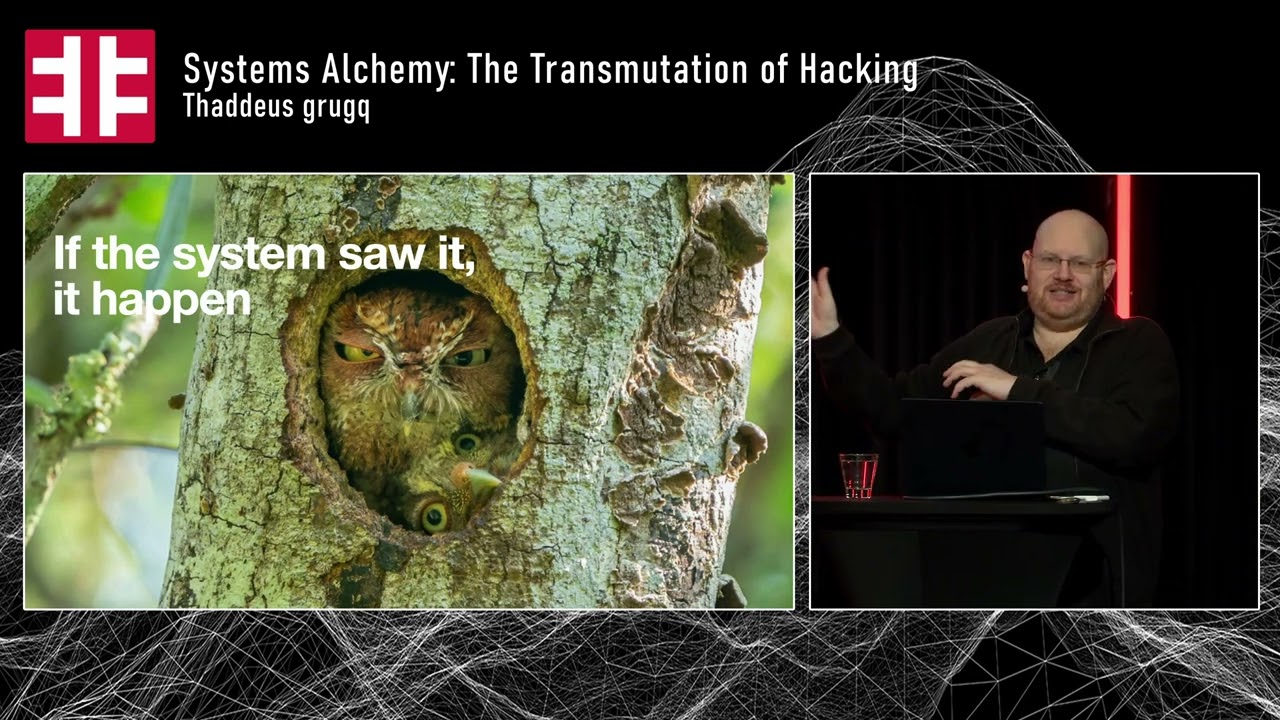
This is an exciting video about the perception of systems, emergent behaviour and how that emergent behaviour and human-in-the-loop create vulnerabilities and change the system’s perimeter. The argument is very logical and straightforward for such a complex topic.
Terraphim helps identify such semantic (rules’) vulnerabilities.
The Innovate UK use case has the following structure:
- Describe the business domain. We interview the customer about the overall business. We then extract terms using NER and search for the appropriate domain standard using Terraphim. Ultimately, we map the initial terms to the standard terms from a controlled vocabulary. Standard terms have attributes (properties) that come from the standard.
- Describe the project domain. We generate the checklists to identify each object’s AS IS and TO BE states. If no answer is provided, we drop this domain term/object from further consideration. The resulting list of objects defines the project scope—current and desired states.
- Choose the analytical lens and plan the project. Select the appropriate Terraphim roles required to move from the actual to the desired state. We identify the roles corresponding to the analytical lenses, the models of other standards, and controlled vocabularies containing verbs—activities and processes. Once we select a role, the list of objects relevant to it appears, and we map those analytical lens objects to the domain lens objects. Based on that mapping, Terraphim proposes activities and processes from the analytical perspective. The list of activities is collected and makes up the project scope.
- The proposal to collaborate is generated using the template and RAG, where listed above pieces of content are initialising prompts.
Exactly as we suggested two years ago, copilots will not help software development significantly. The killer feature is still highly targeted ads and news feeds, in other words, surveillance capitalism, not something remarkable.